Sunshine Captured in a Diamond
In this article
As the weather starts to turn, hold on to the summer sunshine with this showcase of yellow diamonds from Berry's High Jewellery Collection; the biggest, boldest stones available.
But how do yellow diamonds get their colour? From mines to masterpieces; discover the journey of the yellow diamond and how it became a jewel of Royal distinction.
Natural yellow diamonds owe their distinctive colour to nitrogen within their crystal structure.
Colour intensity, cut and setting each contribute to the character of a yellow diamond jewel.
Explore Berry’s yellow diamond designs, or arrange a personalised consultation with our jewellery specialists.


The Formation of the Yellow Diamond
A Natural Beauty
Natural yellow diamonds get their distinctive colour from trace amounts of nitrogen present within their crystal structure. Diamonds form deep beneath the Earth’s surface, in intense heat exceeding 1000°C and pressure reaching around 45 to 60 kilobars. These conditions can allow nitrogen atoms to become incorporated into the diamond’s crystal structure, taking the place of some carbon atoms. A diamond containing nitrogen atoms absorbs some of the shorter-wavelength light, particularly in the blue and violet part of the spectrum. The remaining light reaching your eyes is therefore richer in yellow, orange and sometimes reddish wavelengths, which is interpreted by our brains as yellow. This gives the diamond a beautiful and characteristic yellow tone.
The ring showcased here features a 2.72 carat oval cut fancy yellow diamond accompanied by two oval cut white diamonds and is priced at £54,995.

Decoding Yellow Diamond Grading
Every Shade of Yellow
The concentration and arrangement of nitrogen, together with other defects in the crystal, influence the intensity of the colour. The stronger the relevant light absorption, the more pronounced the yellow appearance can become.
The Gemmological Institute of America grades yellow diamonds by the intensity and purity of their hue. The yellow diamond scale includes nine categories: faint, very light, light, fancy light, fancy, fancy intense, fancy vivid, fancy dark and fancy deep.
The ring showcased here features a 7.04 carat radiant cut light yellow diamond and is priced at £89,995.

The Golden Allure of Yellow Diamonds
A Legacy of Rarity, Radiance and Refined Luxury
Yellow diamonds have long held a place of fascination within the world of fine jewellery, admired for their rarity, warmth and unmistakable presence. Some of the earliest known examples are believed to have been discovered in India’s historic Golconda mines during the 14th century, a region celebrated for producing many of the world’s most legendary gems. As diamond mining later expanded to Brazil and South Africa during the 18th and 19th centuries, yellow diamonds became increasingly recognised for their distinctive beauty. Their golden colour set them apart from traditional white diamonds, attracting the attention of royalty, aristocracy and collectors who valued them as symbols of prestige, individuality and refined luxury.
The ring showcased here features a 2.08 carat radiant cut fancy light yellow diamond graded 'internally flawless' alongside a pear cut 1.00 white diamond and is priced at £34,995.

A Royal Legacy in Every Pocket
One of the most famous royal jewels to feature a yellow diamond is the Diamond Diadem, commissioned in 1820 for the coronation of King George IV. Created by the celebrated royal jewellers Rundell, Bridge & Rundell, the diadem is set with more than 1,300 diamonds and features a four carat fancy light yellow diamond at the centre of its front cross. Its place in British royal history was cemented by Queen Elizabeth II, who wore the diadem in one of her most recognisable portraits; the image on early Bank of England notes from 1960 onwards, bringing a jewel of exceptional royal provenance into everyday public life. Combining monarchy, craftsmanship and national identity; the Diamond Diadem remains one of the most iconic examples of yellow diamonds within historic high jewellery.
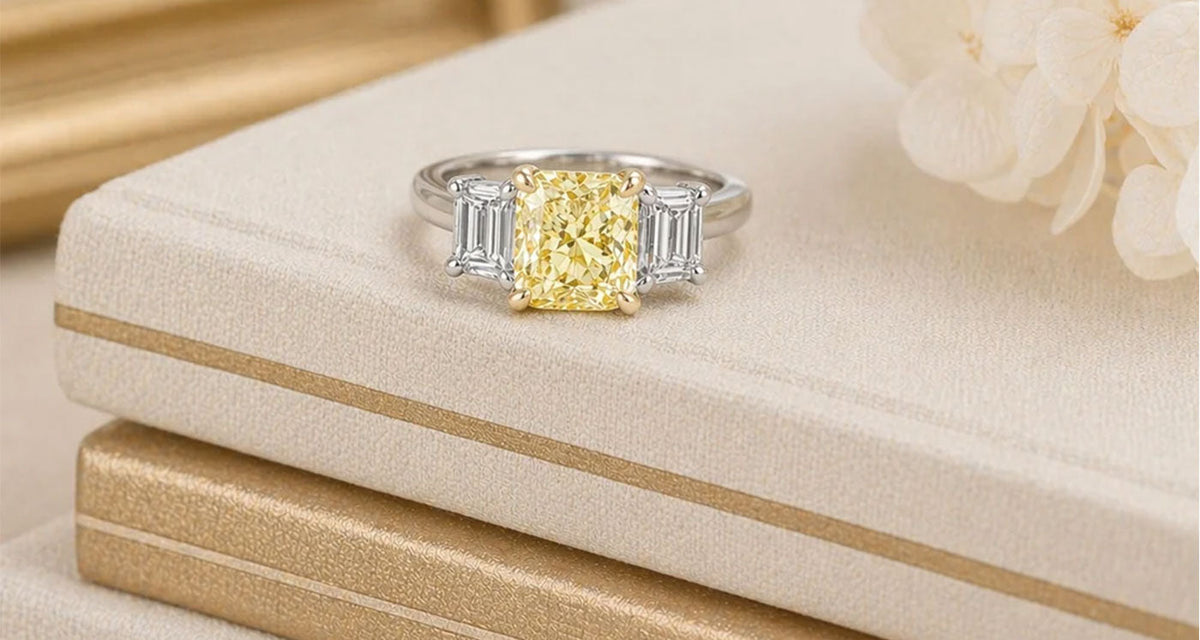
The ring showcased here features a 2.20 carat radiant cut fancy light yellow diamond with a baguette white diamond either side and is priced at £32,995.


Bespoke Yellow Diamond Designs at Berry's Jewellery
Whether adding a splash of colour to your autumn wardrobe or investing in a timeless treasure, every piece created by Berry's is crafted with exceptional attention to detail. With over 40 years of expertise in gemmology, diamond sourcing and jewellery making; our skilled artisans combine traditional craftsmanship with innovative CAD technology to create beautiful designs in the finest precious metals, diamonds and gemstones. Whether you want to customise a design, explore our collections online, or see rings in person, our experts provide a seamless, tailored experience. Contact us to book a personalised consultation or browse our coloured gemstone jewellery collection online. You can also visit one of our UK stores to view our jewellery in person and speak with an expert.

Frequently Asked Questions
What are the most popular cuts for yellow diamond jewellery?
Oval cuts are one of the most popular cuts for yellow diamonds, the elongated shape showcases colour beautifully while creating an elegant, flattering appearance.
Meanwhile emerald cut stones are known for their sophisticated step-cut facets. The shape highlights a yellow diamond's clarity and rich colour, making it especially popular.
What makes a yellow diamond yellow?
A yellow diamond gets its colour from nitrogen atoms trapped within its crystal structure. The nitrogen absorbs some blue light, so more yellow light reaches your eyes, making the diamond appear yellow. The more nitrogen present - and how it is arranged - the stronger and more intense the yellow colour can be.
What is the rarest shade of yellow diamond?
The rarest shade of yellow diamond is generally considered fancy vivid. These are extremely scarce because most natural yellow diamonds have secondary hues (such as orange or brown) or have a lower colour intensity. Among the rarest examples are vivid “canary” yellows with no noticeable modifying tones.
How should I clean my yellow diamond jewellery?
The safest way to clean yellow diamond jewellery is to soak the jewellery in a bowl of lukewarm water with a small amount of mild washing-up liquid. Use a soft-bristled brush to gently remove dirt from around the stone and setting before rinsing with clean water and drying with a soft, lint-free cloth.
To keep your jewellery looking it's best, remove items before gardening, exercising, swimming or using household cleaning products. Storing each piece separately in a soft-lined jewellery box or pouch will also help prevent scratches and minimise wear.
Are Berry's yellow diamonds ethically sourced?
Yes. At Berry's, we are committed to sourcing yellow diamonds responsibly and work closely with trusted suppliers who share our high standards for ethical and sustainable practices.
We carefully select our partners based on their commitment to responsible sourcing, transparency and compliance with recognised industry standards.
