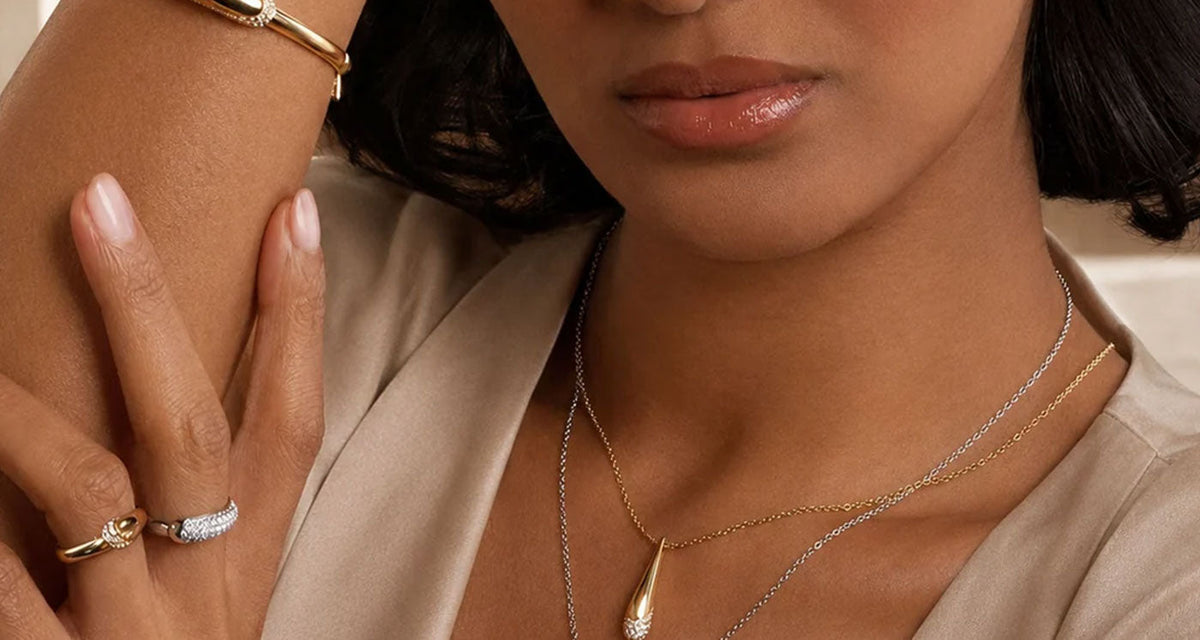
Maximalism is having its moment in yellow gold
Autumn 2026’s maximalist jewellery trend puts heavy 18ct yellow gold, bold settings and architectural design firmly in the spotlight.
At Berry's Jewellers we're here to embrace the movement away from delicate minimalism on the catwalk. The era of understated jewellery is taking a back seat and giving way to single, deliberate statement pieces. Think oversized chunky cuffs, thick collar-bone chokers, or large cocktail rings worn entirely on their own.
The distinctive warmth of 18ct yellow gold is made for statement jewellery; where precious metal meets purposeful design and diamonds are set for maximum impact. Bigger silhouettes, bolder stones and considered settings come together to create jewellery architecture with real presence; both on the catwalk and in real life.

The reason behind the revival
For much of the 2000s and early 2010's luxury jewellery fashion trends were dominated by white metals; platinum, silver and white gold. They fitted the preference for cool, understated and minimalist design in that era.
By the 2020's, vintage jewellery had become more desirable and yellow gold stopped looking 'dated' and started looking, original and collectible.
Jean-Christophe Babin, Bvlgari CEO, told British Vogue that customers were leaning towards yellow gold because it was perceived as more authentic and a steadier fashion choice than white or rose gold. (British Vogue, 2024).
The colour of 18ct yellow gold communicates the material itself; it is completely unambiguous. Whereas white gold can visually overlap with platinum or silver; yellow gold has a distinctive identity. This is what makes it particularly powerful for luxury brands whose proposition is built around craftsmanship, heritage and precious materials.
More than a colour: 18ct yellow gold is an alloy crafted for performance
Blended with other metals to create strength and durability, 18ct gold offers richness alongside the resilience required for bold, everyday designs.
There’s more to an 18ct yellow gold piece than its distinctive warmth and lustre. Look closely and you’ll find a tiny series of symbols, each telling part of its story. In the UK, gold jewellery above the legal weight threshold must carry a hallmark. This is an independent guarantee that the precious metal is what it claims to be. For 18ct gold, the number 750 is the detail to look for: it means the alloy contains at least 750 parts of pure gold per 1000. The hallmark also identifies the sponsor and the Assay Office where the piece was tested There are four historic offices across the UK: London, Birmingham, Sheffield and Edinburgh.
Far from being just a regulatory stamp, the hallmark is a mini signature of authenticity. Some marks carry centuries of history, for example the famous leopard’s head has been associated with London hallmarking for generations. On a bold piece of 18ct yellow gold jewellery, it may be one of the smallest details you’ll find, but it carries a story of purity, provenance and of British craftsmanship.

The modern diamond, reframed
There’s something distinctly modern about the rubover setting. Instead of relying on traditional claws, the diamond is encased by a sleek rim of precious metal, creating a bold, uninterrupted silhouette around the stone. The effect is more graphic and sculptural, allowing the setting itself to become part of the design rather than simply a means of securing the diamond. Set in rich, chunky 18ct yellow gold, a rubover setting feels particularly striking: tactile, architectural and effortlessly contemporary. Where a claw setting allows more light and space around the diamond for a lighter, more delicate finish, the rubover offers a sense of substance and definition - a refined detail that feels perfectly attuned to jewellery’s current appetite for monumental presence.

A new angle on the engagement ring
Tradition is taking a turn - quite literally. The latest take on the engagement ring sees diamonds set horizontally across the finger, challenging the classic convention of positioning a stone vertically to create an elongated, slender silhouette. Instead, the diamond sits widthways, bringing a fresh sense of proportion and an effortlessly modern attitude to the hand. Paired with substantial 18ct yellow gold, the effect is particularly striking - sculptural, confident and deliberately unconventional. It’s a subtle rebellion against the expected; transforming the engagement ring from a symbol rooted in tradition into something that feels distinctly 'of the moment'. Proof that the most exciting designs are often the ones that turn convention on its head.

The art of movement, captured in gold
The Ember jewellery collection by Berry’s Jewellers is a striking fusion of contemporary design and timeless luxury. Inspired by the layered depths of the earth, the shifting patterns of sand dunes and the gentle ripples of water, the Ember collection captures an organic elegance that feels both modern and enduring. Where boldness meets movement, crossover silhouettes offer a fresh interpretation of the chunky gold aesthetic. The designs from the Ember collection use sweeping lines and overlapping forms to create visual tension, giving 18ct yellow gold a sense of fluidity. Every piece is finished with pavé-set diamonds that catch the light from every angle. From diamond rings and necklaces to bracelets and earrings, each design is meticulously crafted to offer a bold yet effortless statement.


Ultimately, the chunky yellow gold trend is less about excess than confidence. It celebrates jewellery as something with substance, character and presence - pieces that do not simply accompany an outfit, but become part of its identity. From sculptural silhouettes to considered stacking and beautifully weighty forms, the latest interpretations prove that 18ct yellow gold can feel every bit as contemporary as it is timeless.


What is the difference between 18ct and 9ct yellow gold?
The difference is the proportion of pure gold within the metal. 18ct gold contains 75% pure gold, with the remaining 25% made up of other metals, while 9ct gold contains 37.5% pure gold. This higher content gives 18ct yellow gold its particularly rich colour and makes it a popular choice for luxury fine jewellery.
Why is 18ct yellow gold so popular in luxury watches and jewellery?
Beyond its visual appeal, yellow gold has a deep connection to the history of fine jewellery and watchmaking. Its distinctive colour immediately communicates the presence of a precious metal, while its association with iconic vintage pieces gives it a sense of heritage and permanence.
Why is chunky yellow gold jewellery on trend?
Chunky yellow gold offers a sense of confidence and presence that feels particularly relevant to modern jewellery styling. Rather than being reserved for special occasions, substantial rings, bangles and bracelets are increasingly being worn as everyday signatures. The combination of generous proportions and the warmth of yellow gold creates a look that feels both contemporary and enduring.
How should you style chunky yellow gold jewellery?
The modern approach is to embrace contrast and proportion. Pair a substantial yellow gold ring with finer bands, layer a statement bangle with more delicate bracelets, or allow a sculptural necklace to become the focal point of an otherwise understated look. Mixing different textures, widths and silhouettes creates a more considered, individual finish without feeling overly matched.